
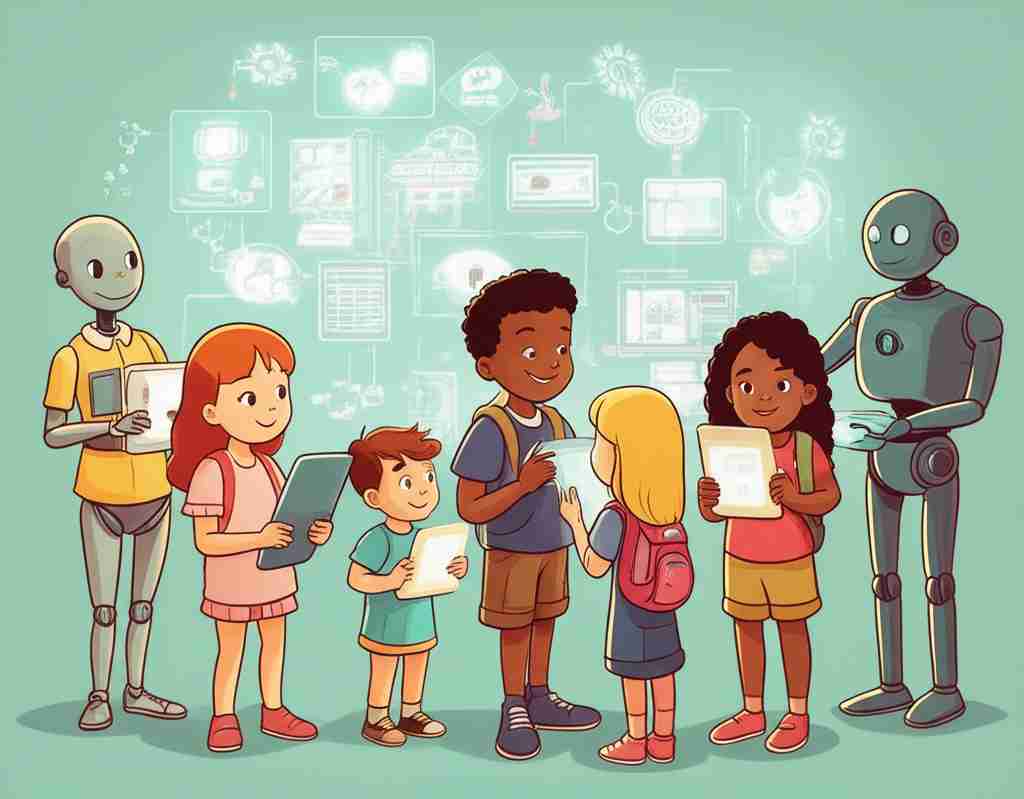
Whose Education? The Future of Learning, Labour, and Living in the Age of AI
The emergence of generative artificial intelligence (AI) is reshaping the fundamental fabric of education, raising timely questions about its core purpose—and what it truly means to prepare learners for life and work in a rapidly changing world. As AI steps in to perform tasks once reserved for students—summarizing books, solving math problems, writing essays—parents, educators, and policymakers are left to grapple with new uncertainties. Whose education is it? What kinds of learning should be prioritized? And how do we best support the next generation to thrive amidst disruption?
This blog post, drawing on expert dialogue and recent research, explores these questions and offers evidence-based insights into the future of learning, labour, and living in the age of AI.
1. Shifting Foundations: Why AI Forces Us to Rethink Education’s Purpose
In past decades, educational success was typically measured by grades, test scores, and eventual employment. Yet with AI now as capable as students—if not more so—at traditional academic tasks, these old indicators lose some relevance. The podcast transcript highlights a powerful statistic: Whereas in 1976, about 40% of high school seniors had read six books or more for fun, today that number has nearly reversed, with 40% not reading a single book for pleasure. Amid such shifts, AI introduces new ways to shortcut learning—producing essays, summarizing content instantly, and even showing work for math problems, blurring the line between authentic learning and automation.
At the heart of current anxieties is the realization that education cannot continue as a mere transactional process—transferring facts for eventual economic reward. Instead, the transcript’s expert guest, Rebecca Winthrop, argues for redefining education around deeper purposes:
- Self-knowledge and human development—Supporting students to know themselves, develop flexible competencies, and navigate uncertainty.
- Community and relationships—Learning to live and collaborate with diverse others.
- Critical engagement—Building the capacity to judge what is real and what is fake, and creatively solve new problems.
This shift in purpose challenges schools to move beyond rote content delivery and towards cultivating adaptable, engaged learners.
2. The Four Modes of Engagement—and What Students Need Now
Engagement is emerging as a key predictor of student success in the age of AI. Drawing from three years of research, Winthrop identifies four distinct “modes” students inhabit:
- Passenger: Doing the minimum, often bored or disengaged but achieving decent grades. AI can reinforce this mode by making it easier to complete assignments without deep learning.
- Achiever: Focused on perfect outcomes, sometimes at the expense of curiosity or creativity.
- Resistor: Avoiding or disrupting learning due to frustration or disconnect.
- Explorer: Deeply proactive, loving what they learn, and showing genuine curiosity—this is the archetype most predictive of future success.
Personal stories from the transcript illustrate both the dangers and potential of technology in these modes. For example, some students use AI to cut corners, never building essential thinking or problem-solving skills. Others leverage AI as a creative assistant—writing their own essays, then refining them with AI tools. The true risk is not the technology itself, but how it shifts students further into “passenger” mode, eroding the muscle of effort, attention, and authentic engagement.
Practical steps for educators and parents include:
- Designing learning experiences that motivate and spark curiosity
- Fostering agency—helping students reflect, set goals, and pursue interests
- Using AI as a supportive tool, not a replacement for genuine thinking
3. Personalization, Equity, and the Role of AI in Transforming Learning
AI opens pathways for unprecedented personalization in education. Envision a future where every student has a responsive tutor, adaptive to their learning style—visual, auditory, or hands-on. AI can provide instant feedback, adapt challenges, and accommodate individual paces. Yet, as the discussion underscores, true personalization should augment, not replace, human relationships and communal learning. Schools remain vital as spaces for socialization, meaning-making, and the development of human capacities that AI cannot replicate.
However, AI also introduces equity concerns:
- Access gaps: Students with home access to AI may surge ahead, widening divides between wealthy and marginalized communities.
- Language and cultural disparities: AI models may underserve students from linguistic backgrounds underrepresented in training data.
- Public vs. private adaptation: Private schools may more rapidly experiment with or restrict technology, while public systems risk falling behind or adopting fads without evidence.
A study conducted at UNESCO supports the need for nuanced, thoughtful adoption of AI in education. The research highlights that technology, when properly integrated, can address access gaps, such as providing AI tutors in under-resourced contexts. However, it cautions that education in the age of AI should not merely focus on technical skills but must re-center on equipping students with “ethical, critical, and creative capacities to face uncertainty.” The study calls for safeguarding human agency in learning, highlighting the importance of equity, quality, and inclusivity as AI becomes more prominent in schools worldwide.
4. Navigating Risks: Practical Lessons and Guardrails for the AI Age
The recent past offers cautionary tales. The widespread, relatively unexamined rollout of screens and devices in classrooms had mixed—and sometimes negative—impacts on students’ attention, socialization, and wellbeing. The transcript’s experts emphasize that, with AI, we must avoid a similar “wait and see” approach. Uncritical adoption can jeopardize cognitive and social development, particularly among younger children.
Guidance for educational stakeholders includes:
- Do not use generative AI unless you have a clear, constructive purpose. Avoid technology for technology’s sake.
- Prioritize human development: Value embodied, in-person learning and human relationships, especially in early childhood, where screen time is linked to reduced language acquisition.
- Focus on AI literacy: As students mature, teach not just how to use AI, but how it works, its risks and benefits, and ethical considerations.
- Install guardrails: Demand that AI tools used with children are specifically designed with educational and developmental safety in mind, involving collaborations between tech developers, child development experts, and educators.
- Consider equity at every turn: Address gaps in access, train educators and students equitably, and monitor unintended consequences.
AI can be a powerful assistive technology for learners with special needs and in under-resourced settings, such as through AI tutors in large or remote classrooms. But its effectiveness—and safety—depend on careful, evidence-based implementation.
5. Actionable Takeaways: Preparing Learners for a Dynamic and Unpredictable Future
Society can no longer assume a straight line from good grades to good jobs. The “future of learning, labour, and living” will prioritize not just what learners know, but how they adapt, connect, and engage. To prepare children for AI-enhanced realities:
- Encourage Agency and Engagement: Look beyond grades—watch for signs that students are actively navigating their learning, reflecting on interests, and building the capacity to pursue new knowledge.
- Pursue Human-Centric Skills: Support oracy (listening and speaking), deep reading, collaboration, and self-reflection as essential skills that AI cannot easily automate.
- Advocate for Screen-Free Spaces: Especially in early years, value environments that foster attention, focus, and in-person socialization.
- Build AI Literacy—Not Just AI Use: Teach older students how AI works, its limitations, and ethical use (distinguishing critical literacy from passive consumption or dependency).
- Foster Sparks—Personal Passions and Motivation: Help learners discover meaningful interests that drive engagement, which often spill over into better achievement and wellbeing in other domains.
- Promote Equity and Inclusion: Support policies and tools that close access gaps and respect diverse learning needs, languages, and backgrounds.
Most crucially, the future will demand lifelong learning—the willingness and motivation to acquire new capacities throughout one’s career and life, adapting to continuous change.
Conclusion: Towards a Human-Centered Education in the Age of AI
The emergence of AI challenges us not only to adapt our curricula and technologies, but to fundamentally reimagine the meaning and value of education. By centering agency, deep engagement, relationship-building, and ethical discernment, we reassert the irreplaceable role of humanity in a world increasingly shaped by machines. Technology, if thoughtfully designed and equitably deployed, can help unlock each learner’s potential. But ultimately, whose education it is—and what it empowers—will depend on the choices made by families, educators, and policymakers today. The future is uncertain, but by focusing on the human, education can rise to meet the age of AI—not be subsumed by it.
For further reading and policy guidance, see the original research: Whose education? The future of learning, labour, and living in the age of AI (UNESCO).
About Us
At AI Automation Perth, we help businesses and educators adapt to today’s changing landscape by designing accessible, tailored AI solutions. As AI transforms learning, labour, and daily operations, our smart tools support better engagement, efficiency, and human-centric outcomes. We’re passionate about making AI practical and equitable—empowering people and organizations to thrive in the age of intelligent technology.