
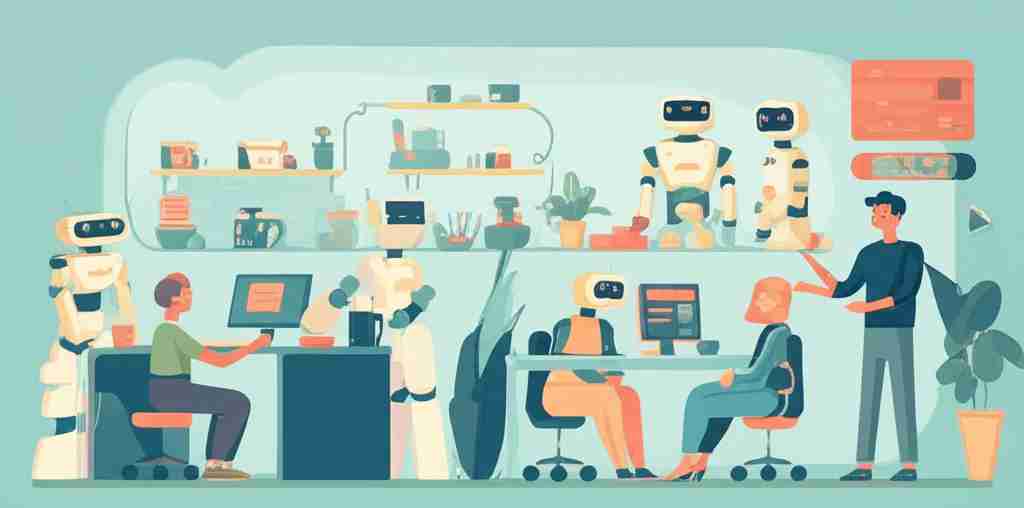
The AI Industrial Revolution Puts Middle-Class Workers Under Threat This Time
The industrial revolution of the 21st century, powered by artificial intelligence (AI), is rapidly transforming societies and economies around the globe. While automation and AI promise unmatched gains in productivity and efficiency, these benefits carry significant risks for the very foundation of modern economies: the middle class. In recent years, thousands of workers—especially those in traditionally stable, mid-skilled professions—have been displaced by smart machines and software. This technological shift threatens not only economic stability but also the social structures that depend on a thriving middle class. In this blog post, we explore the profound effects AI is having on middle-class workers, why this revolution is different, and what the future might hold.
1. How AI is Reshaping the Workforce—and Who’s at Risk
Tech giants such as Amazon, Microsoft, Google, and Meta have reported record profits, earning close to $268 billion in 2024. However, these windfalls have coincided with widespread layoffs, disproportionately affecting middle-class employees. For example:
- Microsoft announced the layoff of about 6,000 workers despite strong financial performance.
- Meta eliminated approximately 3,600 jobs, about 5% of its global workforce, in a single announcement.
- In 2023 alone, the tech industry saw more than 260,000 layoffs, many attributed directly to AI-driven efficiencies.
Unlike previous waves of automation that primarily impacted blue-collar manufacturing jobs, the current revolution is targeting “middlekill” jobs—those that require mid-level skills, often held by people without advanced degrees but providing middle-class incomes. From clerical and manufacturing roles to increasingly white-collar positions in finance, law, education, and journalism, automation is no longer confined to the assembly line. Instead, AI is automating routine office and cognitive tasks once thought safe from technological disruption.
2. The Disappearance of Middle-Class Careers
Historically, the middle class has formed the backbone of the U.S. economy and society, anchored by jobs in fields like law, education, finance, and journalism. Traditionally, these occupations offered:
- Stable incomes
- Health benefits
- Opportunities for advancement
- Social mobility for workers and their families
Today, AI-powered platforms are rapidly eroding many of these career paths:
- Accounting: AI platforms can process and audit financial data, reducing the need for human staff.
- Journalism: Automated article generators produce news coverage, diminishing demand for reporters.
- Education: AI-powered tutoring and learning platforms are beginning to replace some teaching roles, particularly in individualized instruction.
- Programming: Tools like GitHub Copilot automatically generate code, reducing entry-level opportunities.
- Law: AI-driven systems draft legal documents and perform case law analysis, replacing paralegals and legal assistants.
- Finance: AI algorithms analyze market data and trends in real time, reducing need for junior analysts.
- Design: Generative AI allows non-specialists to create professional images, impacting demand for trained graphic designers.
The upshot is that previously dependable career ladders, where workers could move from junior roles to senior positions over time, are disappearing. When entry-level and mid-level positions vanish, professional progression for new entrants becomes nearly impossible.
3. Widening Inequality: Economic and Social Impacts of AI-Driven Disruption
The consequences of AI-induced job loss go beyond individual careers. As more middle-class jobs disappear:
- Wealth is becoming increasingly concentrated among the elite who own or control AI technology, platforms, patents, and large data assets.
- Workers are left with fewer options, often forced into unstable or lower-paying work without benefits.
- Traditional means of social mobility—such as joining a company at entry-level and working upward—are being eroded as entry jobs vanish.
This shift is reflected in recent economic data:
- Between 1979 and 2022, U.S. labor productivity grew by 64.6%, but the hourly compensation of the average worker rose by only 17.3%.
- According to the Federal Reserve, as of 2023, the wealthiest 10% of Americans own 70% of all wealth, up from prior decades.
- The share of U.S. wealth held by the middle class dropped from 62% in 1980 to just 43% in 2023.
This growing divide isn’t just economic—it has social and political consequences. A weakened middle class has less ability to:
- Participate actively in democratic processes
- Invest in education or homeownership
- Sustain stable families and communities
The stability of entire societies hinges on a robust middle class. Its erosion risks undermining the social contract and the prosperity built over generations.
4. Scientific Evidence: The Unique Threat Facing Middle-Class Workers
A study conducted at The Guardian highlights the unprecedented challenges the current AI revolution poses for middle-class workers. According to The AI industrial revolution puts middle-class workers under threat this time, this wave of automation differs from previous industrial revolutions because it disproportionately affects white-collar and historically secure mid-skill jobs. The research shows that while past technological innovation primarily replaced low-skill or routine manual labor, today’s AI advancements are targeting sectors like education, law, and finance—environments once thought immune to automation. The findings reinforce growing concerns that middle-class mobility and job security are evaporating, putting social and economic stability at risk as AI takes over tasks previously performed by people with specialized training. The study’s key message: the middle class—long seen as the foundation of democratic society—faces a unique and urgent threat from the rise of artificial intelligence.
5. What Can Workers and Policymakers Do?
For those concerned about their jobs and future opportunities, the AI revolution need not be a zero-sum game. While the challenges are serious, there are proactive steps both individuals and policymakers can take:
- Continuous learning and upskilling: Workers must adopt a mindset of lifelong learning, seeking out training in areas that AI cannot easily replicate, such as creative problem-solving, interpersonal skills, and complex project management.
- Policy interventions: Governments can invest in education and vocational retraining for displaced workers, prioritize policies that encourage equitable wealth distribution, and strengthen safety nets for those affected by automation.
- Corporate responsibility: Businesses benefiting from AI-driven efficiencies should explore ways to re-train or redistribute workers rather than simply laying off large numbers of employees. They should also support inclusive growth by investing in local communities and workforces.
- Personal financial planning: As economic landscapes shift, workers should review their financial plans, diversify skillsets, and remain adaptable to emerging trends and industries.
- Engaged citizenship: Active participation in civic and community affairs can help shape laws and policies that guide the responsible use of AI and protect vulnerable populations.
Above all, society must recognize that AI’s benefits and burdens are not distributed equally. Ensuring a just transition to an AI-powered economy will require joint efforts from workers, employers, policymakers, and citizens alike.
Conclusion: Navigating the New Industrial Revolution
The AI-driven industrial revolution is fundamentally changing what jobs are available, who holds them, and how wealth and opportunity are distributed. Middle-class Americans—long the backbone of prosperity and democracy—are at greater risk than ever before. But while the challenges are steep, they are not insurmountable. By understanding the forces at play and taking deliberate, forward-thinking action, it is still possible to create a future where technology elevates society rather than divides it. The time for conversation and concerted effort is now.
About Us
At AI Automation Perth, we help businesses navigate the fast-changing world of AI. As automation transforms the workforce, our tailored solutions empower local organisations to adapt, streamline tasks, and stay competitive. We’re committed to making AI accessible and reliable for small and medium-sized businesses, supporting you through the opportunities and challenges of the new industrial revolution.