

What Is Agentic AI? Everything to Know About Artificial Intelligence Agents
Artificial Intelligence (AI) has rapidly evolved from simple chatbots and assistants to sophisticated systems capable of reasoning, planning, and executing elaborate workflows on their own. At the heart of this new wave is Agentic AI, a transformative approach that enables autonomous AI agents to act with purpose and continuity. Whether you’re wondering how AI agents differ from regular AI, what technical innovations make them unique, or how you might benefit from them in real life, this comprehensive guide provides everything you need to know about artificial intelligence agents.
1. What Is Agentic AI? A Clear Definition
Agentic AI, often called an AI agent, is a form of artificial intelligence that can think, reason, and act proactively in continuous cycles to accomplish specific goals—without constant human direction.
Unlike traditional large language models (LLMs) or conversational AI that provide static, one-off responses, Agentic AI agents can:
- Plan: Devise a series of actions aimed at achieving a user-defined goal.
- Act: Interact autonomously with data, external tools, or digital environments to progress toward that goal.
- Reason: Make contextual decisions, adjust their approach based on new information, and persist in pursuit of a task, even when obstacles arise.
- Loop: Repeat their planning and execution steps automatically until the objective is complete or an error is encountered.
In simple terms, agentic AI is “LLMs using tools in a loop.” Think of the fictional AI assistant Jarvis from Iron Man—always aware, adapting, and taking action on your behalf (albeit with more limitations and safety measures in reality).
2. How Are AI Agents Different from Traditional AI?
The evolution from standard AI models to agentic AI agents is best understood through practical examples:
- Non-agentic AI: Input-output models. You ask for today’s weather; if the data isn’t in the AI’s training material, it can’t help. The response is reactive and limited to static knowledge.
- AI Workflow Systems: The AI can use tools (like a weather plugin) but only when specifically instructed by a user. It improves functionality but still lacks genuine autonomy.
- AI Agent (Agentic AI): The AI acts on your goal (“What’s the weather?”) and, on its own initiative, checks your current location, retrieves location-specific weather data, identifies you’re on vacation, suggests you bring a jacket (even offering affordable choices if it notices you’re budget-conscious), and provides helpful links—without requiring you to spell out every step.
Key characteristics that separate AI agents from more basic AI systems include:
- Autonomy: Agents drive actions without direct instructions for every step.
- Dynamic Planning: Agents can form, adjust, and execute multi-step plans.
- Context Awareness: Agents utilize memories and tool integrations to draw on context from prior interactions and the environment.
- Error Handling: They persistently strive to complete tasks, working through obstacles or unexpected data.
These features allow agentic AI to automate complex, multi-stage workflows and adapt on-the-fly in ways static AI simply cannot.
3. The Inner Workings and Structure of AI Agents
What exactly enables AI agents to act so flexibly? Agentic AI systems are constructed from the following key components:
- The Model: The “brain” of the agent (often an LLM like GPT-4 or similar). Models vary in sophistication; simple models suffice for basic tasks, while larger models tackle more complex reasoning and planning.
- Tools: External software or APIs that extend what the agent can do. Tools are broadly categorized as:
- Data tools: Retrieve needed information (from databases, PDFs, or web searches). This is often referred to as retrieval augmented generation (RAG)—combining an AI’s knowledge base with live pulling of new data.
- Action tools: Perform real-world actions, such as sending emails, updating databases, or manipulating digital content.
- Orchestration tools: Manage or coordinate groups of agents working together or controlling other systems.
- Memory: Agents maintain both short-term (conversational history) and long-term memory (saved key facts), giving them context and continuity across interactions.
- Instructions: Clear prompts or initial definitions specifying the agent’s role, goal, available tools, and how to measure success. Also known as prompt engineering.
These components interact in a loop: the agent considers its goal, leverages tools and memory, acts, evaluates outcomes or new information, and repeats the process as needed. This architecture enables continual improvement and adjustment during pursuit of a user’s objective.
Notably, many widely used platforms and software development kits (SDKs) such as Langchain, Autogen, Crew AI, Google’s Agent SDK, and OpenAI’s Agent SDK, as well as automation tools like Flowwise and Make, make it much easier for both developers and non-programmers to build, deploy, and manage their own AI agents.
4. Common Types and Design Patterns of AI Agents
AI agents can be built in a variety of configurations, each suited to different use cases and complexities. The most common patterns include:
- Single Agent: A lone agent handles every part of the process. Simple, robust, and adequate for many straightforward workflows.
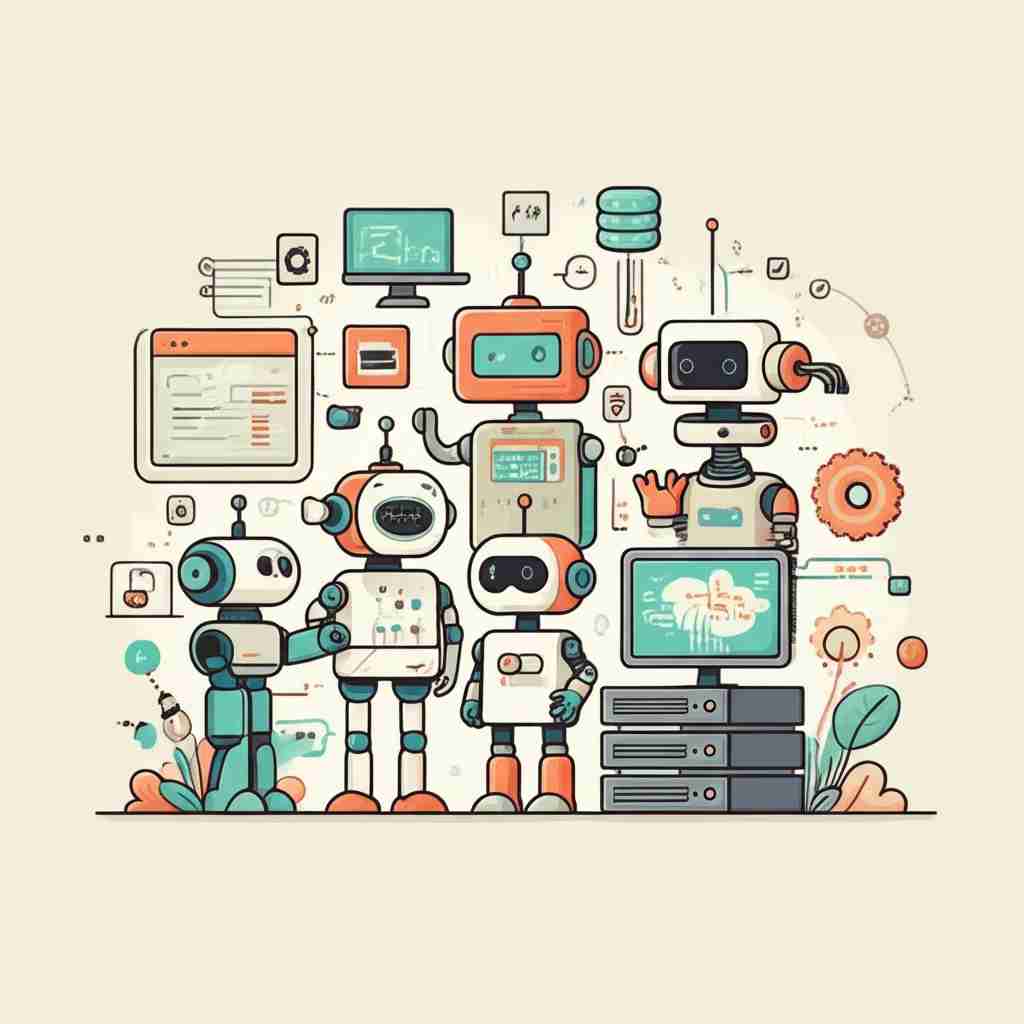
- Multi-agent Crews: A “crew” of specialized agents share the work, each focusing on a different subtask (e.g., one researches, another analyzes, another executes tasks), collaborating to achieve a common objective.
- Sequential Workflows: Agents (or tasks) are organized in a strict sequence, like a relay race, where each step hands off to the next. Useful for processes that are strictly ordered but less flexible to change.
- Hierarchical Systems: Managed like an organization, where a “manager” agent breaks a big goal into tasks and delegates them to “worker” agents. Manager agents strategize; workers focus on implementation details.
- Parallel Agents: Multiple agents operate at the same time on different problems or aspects of a larger problem, significantly increasing speed and efficiency (akin to multiprocessing in programming).
- Hybrid Systems: Real-world AI projects often blend several of these models to capture the benefits of all, though this raises design complexity and control challenges.
This flexibility enables agentic AI to automate everything from simple workflows to highly complex, multi-agent environments, adjusting the structure to the requirements at hand.
Research published in CNET’s guide “What Is Agentic AI? Everything to Know About Artificial Intelligence Agents” found that structuring agents with robust models, tool integrations, and memory modules significantly improves autonomous reasoning, contextual decision making, and workflow automation. The study details how agentic architectures—enabled by retrieval-augmented generation, flexible memory, and advanced orchestration—are transforming how AI can handle tasks ranging from data aggregation and creative content generation to smart workflow management. These findings strongly support the practical value and rapid adoption of agent-based frameworks across industries.
5. Practical Takeaways: How to Leverage Agentic AI
The agentic AI revolution is well underway, bringing practical automation and workflow orchestration to businesses and individuals alike. Here’s how you can get started or benefit from this new technology:
- Automate Tedious Processes: AI agents can handle repetitive or multi-stage tasks—such as data entry, email management, or report generation—with little ongoing oversight.
- Scale Multistep Projects: From creative workflows (like generating drafts and visual assets) to financial analysis and customer service, agents can coordinate entire projects, act as virtual teams, and continuously improve performance with memory and feedback.
- Choose Your Tools: No-code and low-code solutions (Flowwise, Make, Nan) are available for non-programmers. Developers can explore specialized SDKs (Langchain, Autogen, etc.) to build fully customized agents and integrate them directly with business systems.
- Consider Limitations: While agentic AI is powerful, building effective agents requires thoughtful design, careful role definition, and ongoing monitoring. Hybrid systems can quickly become complex, so start simple and expand as your comfort with the technology grows.
- Stay Updated: Agentic AI is still in its early stages. New capabilities and tools are constantly emerging—continued learning and experimentation will help you stay ahead.
As AI agents mature, their potential for improving productivity, automating knowledge work, and delivering tailored digital experiences will only increase. From single-use tools to fully autonomous digital workforces, agentic AI represents a leap forward in practical AI application.
Conclusion: The Future of Agentic AI
Agentic AI agents mark a significant shift in artificial intelligence, from reactive tools to proactive digital collaborators. With the ability to reason, plan, act, and adapt, agentic architectures are unlocking new possibilities for automation, workflow optimization, and personalized experiences across industries. As the field rapidly advances with new frameworks, integrations, and design patterns, understanding the core principles and practical capabilities of agentic AI prepares you to leverage its benefits—and to shape the future of intelligent, goal-driven systems.
About Us
At AI Automation Perth, we specialise in bringing the power of agentic AI to small and medium-sized businesses. Our tailored solutions help you automate everyday workflows—letting smart AI agents handle tasks like admin, communications, and data processing. As AI evolves toward more autonomous and proactive systems, we’re here to make these innovative technologies accessible, efficient, and relevant to your business needs.